


Discover the Deccan with the ‘Deccan Studies Program’
An Immersive Exploration of the Deccan’s Cultural and Architectural Heritage
The Deccan Studies Program (DSP) is a pioneering academic immersion that introduces undergraduate students to the rich cultural, architectural, and historical heritage of the Deccan region. Created by the Deccan Heritage Foundation India in collaboration with the Harish & Bina Shah Foundation (HBSF) and Ashoka University, the program combines fieldwork, expert mentorship, and conservation training to cultivate the next generation of heritage professionals. Structured as an academic internship, it brings together site visits to historically significant monuments, lectures by national and international experts, and hands-on conservation experiences.
A Remarkable First Edition — and a Continuing Need
Running from July 7 to August 7, 2025, the inaugural edition brought 14 undergraduate students into the field for four weeks of hands-on learning across Telangana and Karnataka. With guidance from leading scholars and practitioners, participants engaged deeply with major monuments, living traditions, and real-world conservation challenges.
The results exceeded expectations:
- Students developed thoughtful proposals for sustaining heritage sites and
strengthening local community involvement. - The Department of Archaeology, Museums and Heritage (Government of
Karnataka) formally recognized the cohort’s work at Lakkundi — an exceptional honor for undergraduate research. - Participants built skills in imaging, materials analysis, conservation documentation, museum practice, and heritage management.
The pilot demonstrated that immersive, field-based learning can change career trajectories and broaden access to the heritage sector. Many students described the experience as “transformative,” “eye-opening,” and “a turning point.”
Help Us Welcome the Next Cohort
Building on this success, DHF is preparing to offer the program again in the summer of 2026 with expanded faculty, new field sites, and an even stronger learning framework. Interest among students is high — particularly among those from public universities and under-resourced backgrounds, who bring fresh perspectives but often cannot afford the cost of tuition, travel, or fieldwork.
To ensure that financial constraints never prevent a deserving student from participating, DHF has launched a dedicated Scholarship Fund.
Scholarship support enables:
- Tuition for the full Deccan Studies Program
- Travel and living expenses for field-based learning
- Hands-on conservation internships at the Jayalakshmi Vilas Mansion Museum, Mysore
- Mentoring opportunities with leading scholars and global partners
Your contribution directly opens the door for a student who would otherwise be unable to join the next cohort.
Your Support Is Crucial
Many promising young scholars — particularly those who could benefit most — cannot afford to participate without assistance. Scholarship funding ensures that the next cohort reflects the diversity, talent, and commitment of students across India.
Your generosity helps shape future leaders in India’s heritage sector — and safeguards the cultural legacy of the Deccan for generations to come.
Support the DSP Scholarship Fund
Overview of the Deccani Studies Program 2026
(On-Site Explorations: July 15–30, 2026 | Mysore – Art Documentation, Conservation and Restoration week: July 31 – August 8, 2026)
The 2026 Deccani Studies Program unfolds as a fifteen-day immersive field journey across Maharashtra and Karnataka, tracing the Buddhist, Sultanate, Chalukyan, Vijayanagara, Jain, and Adil Shahi legacies of the Deccan. Structured chronologically and thematically, the itinerary combines on-site lectures, guided explorations, evening seminars, and independent study time — allowing participants to engage critically with monuments, landscapes, and living traditions.
1. Aurangabad & the Buddhist–Sultanate Interface (July 15–19)
The program begins in Aurangabad with an orientation session and a contextual introduction to Buddhism before entering the rock-cut landscapes of western India.
Ajanta Caves
Ellora Caves
Led by Dr. Pia Brancaccio, students study the painted narratives and architectural innovations of Ajanta, followed by the multi-religious excavations at Ellora and the lesser-visited Pitalkhora caves. These visits foreground questions of patronage, trade networks, and the mobility of artistic idioms across the Deccan. The focus then shifts to medieval Sultanate architecture under Dr. Pushkar Sohoni:
Daulatabad Fort
Khuldabad
Ahmednagar Fort
Through Daulatabad, Khuldabad, and Ahmednagar, participants explore military architecture, urban shifts, and the political landscape of the Nizam Shahi and related Sultanates. Evening lectures reinforce site-based discussions, connecting architecture to questions of empire, economy, and regional identity.
2. Deccan Sultanates & the Adil Shahi World (July 20–22)
Traveling through Parenda and Solapur, the cohort moves into Karnataka to study the Adil Shahi capital of Bijapur.
Gol Gumbaz
Ibrahim Rauza
Jama Masjid Bijapur
In Bijapur, monuments such as Gol Gumbaz, Ibrahim Rauza, the Jama Masjid, Gagan Mahal, and the Citadel serve as case studies for understanding courtly aesthetics, funerary architecture, water systems, and the cosmopolitan artistic exchanges of the 16th–17th centuries. Evening lectures examine the architectural and artistic innovations of the Adil Shahis within a broader Indo-Persian framework.
3. Chalukyan Sacred Landscapes (July 23–24)
The journey continues to Badami and the Malaprabha valley under the guidance of Dr. Kailasa Rao and Dr. Srikumar Menon.
Badami Caves
Aihole
Pattadakal
At Badami’s rock-cut caves and structural temples, followed by Aihole and Pattadakal, students examine early experiments in temple typology, iconography, and spatial articulation. Discussions consider how the Chalukyan idiom informed later Deccan architectural traditions. A virtual lecture by Dr. George Michell contextualizes Chalukyan art within pan-Indian temple movements.
4. Vijayanagara & Sacred Urbanism (July 25–28)
The program then enters the monumental landscape of Hampi.
Virupaksha Temple Hampi
Vittala Temple
Elephant Stables Hampi
Led by Dr. Srikumar Menon and Dr. Helen Philon, participants explore both the Sacred and Royal Centres of Vijayanagara — from the Virupaksha Temple and Hemakuta Hill to the Vittala Temple complex, Elephant Stables, Lotus Mahal, and Hazara Rama Temple. Themes include imperial urban planning, ritual topography, hydraulic systems, and conservation challenges in living heritage landscapes.
5. Jain Continuities & Transition to Mysore (July 29–30)
Shravanabelagola
At Shravanabelagola, students engage with Jain monastic traditions, pilgrimage, and patronage. A comparative lecture — Why Jains sustained while Buddhists declined in the Deccan — encourages analytical reflection across earlier site visits. The field segment concludes with travel to Mysore, marking the transition from site-based learning to academic and practicum-oriented engagement.
Mysore: Restoration, Documentation & Heritage Economics (July 31–August 8)
In Mysore, the program shifts to methodological training and applied heritage studies, including:
● Digital preservation (LiDAR & photogrammetry, in dialogue with Factum Foundation)
● Museography and new digital display strategies
● Conservation and restoration case studies
● Cultural economics and sustainability models
Participants interact with restoration professionals for the last 10 days of focused engagement, alongside seminars on heritage finance, museum practice, and long-term viability planning. The program culminates in student presentations proposing conservation, documentation, or management strategies for selected Deccan sites.
Mentors & Faculty (Confirmed to date)
On-Site Faculty:
● Dr. Pia Brancaccio – Buddhist Art & Murals (Ajanta, Ellora)
● Dr. Pushkar Sohoni – Sultanate & Adil Shahi Architecture
● Dr. Helen Philon – Bahmani & Vijayanagara Studies
● Dr. Srikumar Menon – Vijayanagara & Chalukyan Sites
● Dr. Kailasa Rao – Temple Architecture (Chalukyan Traditions)
Virtual & Mysore Faculty:
● Mr. Adam Lowe & Mr. Imran Khan – Digital Preservation (Factum Foundation)
● Dr. Madhuvanti Ghose – Museums & Cultural Preservation
● Prof. Sarah Kenderdine – Digital Museography
● Ms. Brinda Somaya – Economic Aspects of Heritage Restoration
● Prof. Moussima Dutta – Cultural Economics
● Art Collections, Conservation & Restoration Team: Dr. Sreekumar Menon, Dr. Maninder
Gill, Maniyarasan, Dr. Shobha Talengala
Pedagogical Approach
The 2026 curriculum integrates:
● On-site monument study
● Evening academic lectures
● Independent reflection periods
● Digital documentation exposure
● Conservation practicums
● Heritage finance & sustainability modeling
By moving chronologically from early Buddhist sites to Sultanate capitals, Chalukyan temples, Vijayanagara urbanism, and Jain pilgrimage traditions — before culminating in restoration practice — the program offers a layered understanding of the Deccan as a dynamic, interconnected cultural region.
A Look Back at the 2025 Program
The 2025 curriculum unfolded in four thematic phases, each rooted in a distinct architectural and historical milieu of the Deccan:
1. Hyderabad, Warangal & Bidar (July 7-13)
Students began their journey in Telangana, studying the Kakatiya heritage at Warangal, Palampet, and Ghanpur, followed by explorations of Golconda’s Qutb Shahi legacy and the Asaf Jahi monuments of Hyderabad. The final day in Bidar focused on the Bahmani capital, its fort, and the Madrasa of Mahmud Gawan.
2. Hampi & Chalukyan Sites (July 14-17)
The Vijayanagara capital of Hampi served as a living classroom for studying temple architecture, urban planning, and imperial history. Coracle rides to the Vitthala temple, discussions on conservation at the restored Gagan Mahal, and visits to Lakkundi and Sudi deepened students’ understanding of the Chalukyan and Vijayanagara architectural traditions.
3. Hoysala Legacy (July 19-20)
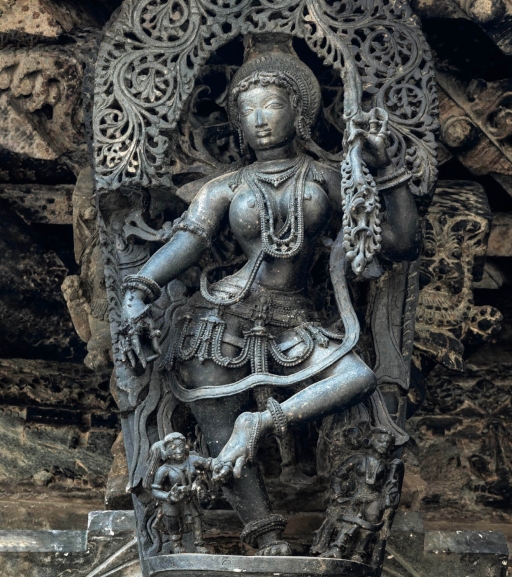
Traveling to Belur and Halebidu, participants analyzed the high medieval sculptural traditions of the Hoysala dynasty, contrasting them with earlier and later Deccan architectural movements.
4. Mysore & Restoration Practicum (July 21–August 7)
In Mysore, students gained hands-on exposure to restoration work at Jayalakshmi Vilas Mansion Museum, coupled with site visits to Somanathapura and Srirangapatna. They attended lectures on museography and heritage sustainability planning, and developed financial models to support the long-term viability of cultural sites. The program concluded with student presentations on heritage management and conservation strategies.
Mentors & Faculty
Participants engaged with leading scholars and practitioners in the field of Deccan studies and heritage conservation, including: Mr Adam Lowe, Mr Anirudh Kanisetti, Mr. BV Papa Rao, Dr. Madhuvanti Ghose, Mrs Giovanna Forlanelli, Dr. GSV Suryanarayana Murthy, Dr. Helen Philon, Dr. Kailasa Rao, Dr. Kamalika Bose, Dr. Marika Sardar, Ms Manuela Luca-Dazio, Dr. Panduranga Rao, Dr. Pushkar Sohoni, Dr. Sarah Kenderdine, Dr. Shobha Talengala, and Dr. Sreekumar Menon, and Dr. Srikumar Menon.
Their mentorship ensured a deep and nuanced understanding of both academic and field-based approaches to heritage work.
Eligibility
The program is open to undergraduate students across India with academic interests in history, heritage, architecture, conservation, economics, or related fields. Students from Ashoka University, Shiv Nadar University, and Mysore University attended last year; in 2026 we hope to make scholarships available for eligible candidates.
Program Coordinator
Sai Charan Palakurthi (Charan)
Assistant Project Manager, Deccan Heritage Foundation India
charan@deccan-heritage-foundation.org
Details

Project Status
Planned

Location
Various

Partners
DHF India
Harish & Bina Shah Foundation (HBSH)
Ashoka University
Kakatiya Heritage Trust
The Rainwater Project
ISB Center for Business Innovation
Mysore University

Environment
Learn about heritage preservation and economic sustainability of heritage sites

-
Check out our upcoming and past events, from webinars to annual lectures and more
-
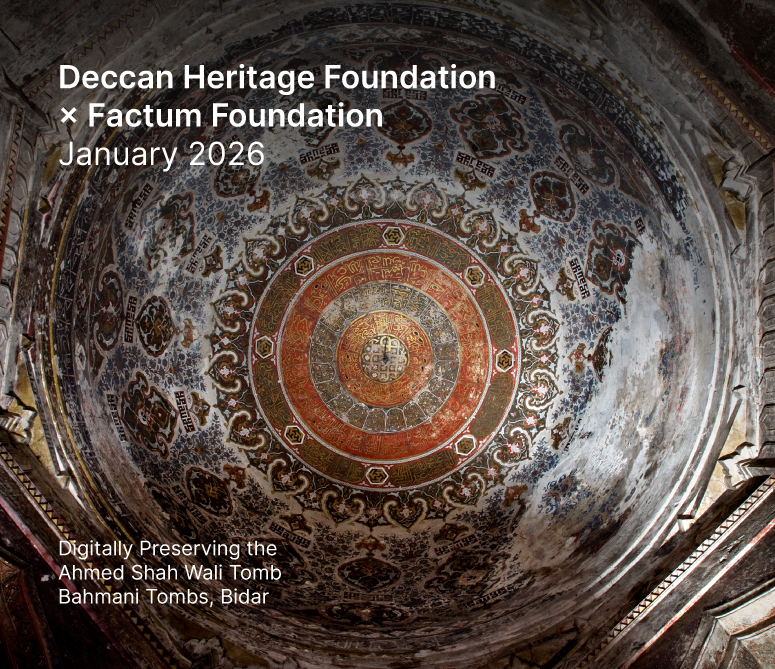
Learn about our landmark digital documentation project at the mausoleum of Ahmed Shah Wali in Bidar in collaboration with Factum Foundation
-
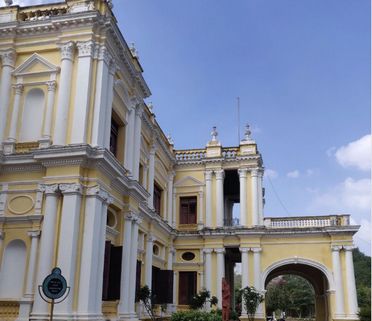
Discover how the DHF is reviving Jayalakshmi Vilas Mansion, a symbol of Mysore’s royal grandeur
-
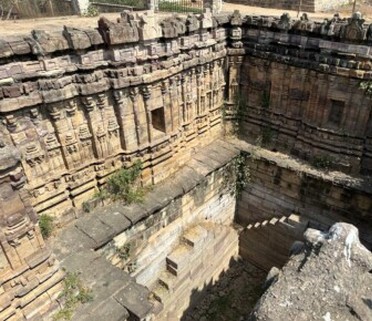
Learn about our recently completed restoration of the Kalyani Chalukya-era Nagakunda Stepwell in Sudi, Karnataka
-
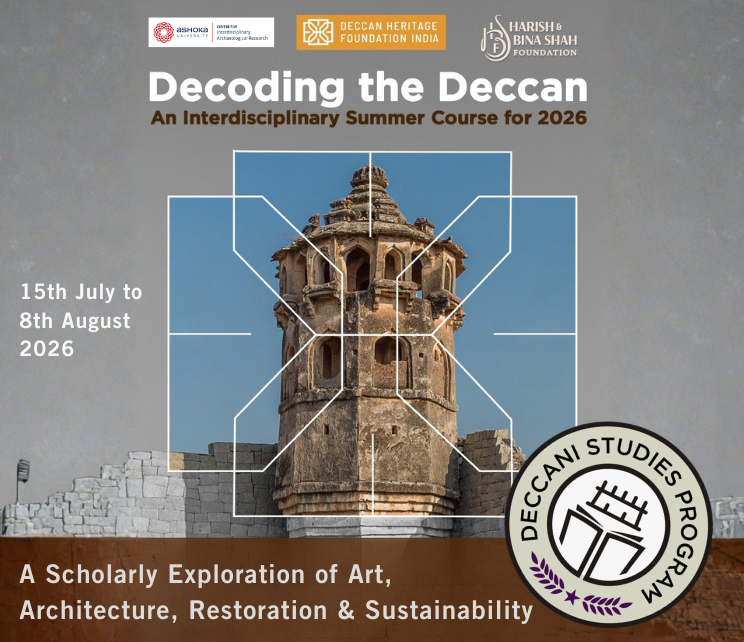
Support scholarships to DHF’s next Deccan Studies Program
-
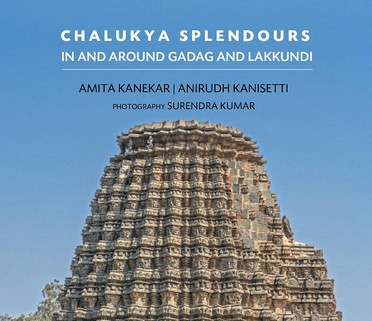
Order our new guidebook on the Late Chalukya monuments in Gadag & Lakkundi, Karnataka